

MOONSTONE, LABRADORITE & SPECTROLITE
A labradorite lying flat on my bench is a grey stone.
Tilt it and the colour arrives. The flash appears only at certain angles, so I set these stones for how the light will hit them when worn rather than how they look on my bench. Everything here is made by hand in my studio on the Sunshine Coast of British Columbia.

Labradorite and spectrolite. What is the difference?
Same mineral, two countries, and the base colour separates them. Labradorite is named for Labrador and I love that it is Canadian. Its body is translucent grey and it flashes blue and green. Spectrolite comes from one deposit in Finland, its body is properly black, and that darkness is why it throws reds and golds the Canadian material rarely does.
I love the dark mystery of spectrolite, the way it looks closed and moody until the light catches it. Lately I have been finding labradorite that is striated rather than solid blue. All of it is natural stone, mined rather than made.
Why does the flash come and go as I move?
Because the colour is not pigment. It is light bouncing off layers inside the stone too fine to see, and only from the right direction. Moonstone does a softer version of the same trick, a glow that floats under the surface rather than flashing across it.
This is what decides how I set a piece. A stone that looks wonderful face up on my bench can be dull at your collarbone, so I find where the colour lives before I build around it. It is why so much of this collection is pendants and earrings. They swing, and these stones are best in motion.
What is the rounded wire over the stone?
I call them my rainbow settings: a rounded wire arched over the gem, and on some pieces two of them. It came out of working with rainbow moonstone and is the newest thing I am doing.

Every stone here is chosen one at a time for shape and colour, so most of these pieces are the only one. When something sells it is gone. I do take commissions, though only in my own style. Tell me what you are after.
Questions about these stones
Is rainbow moonstone the same as moonstone?
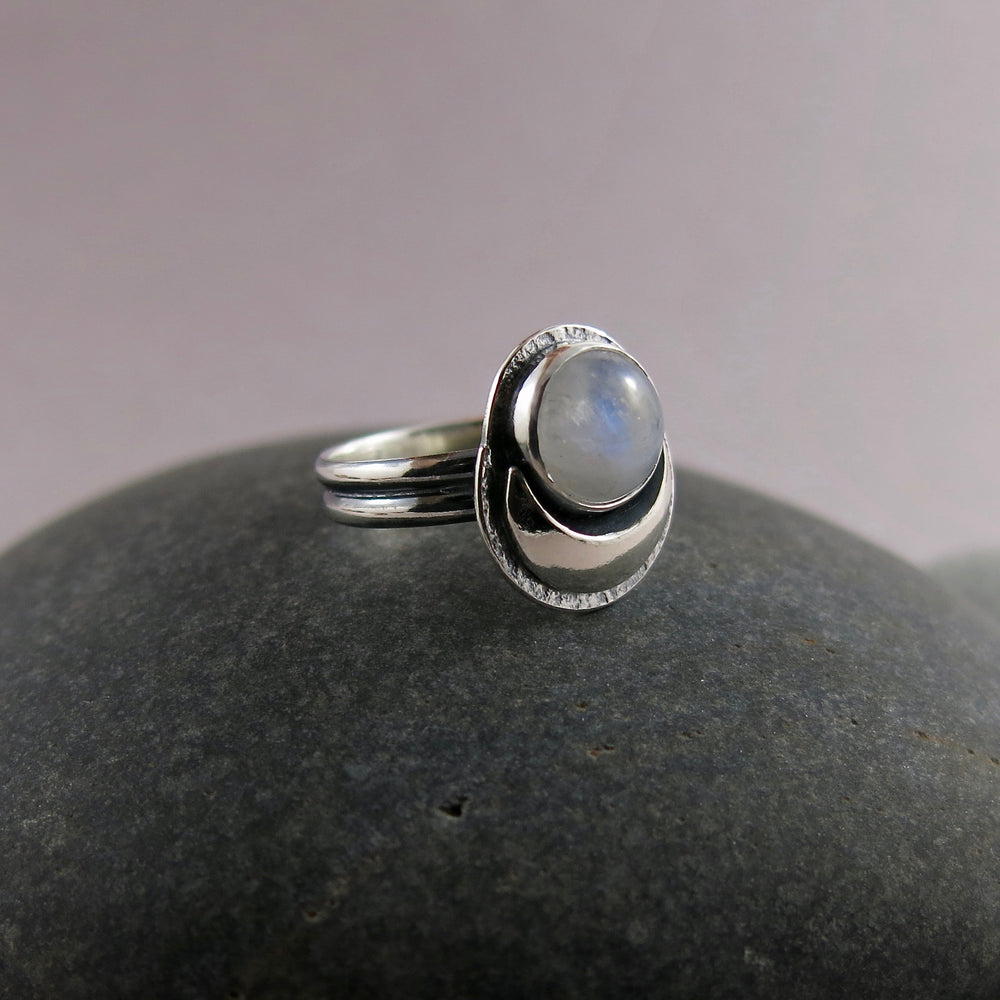
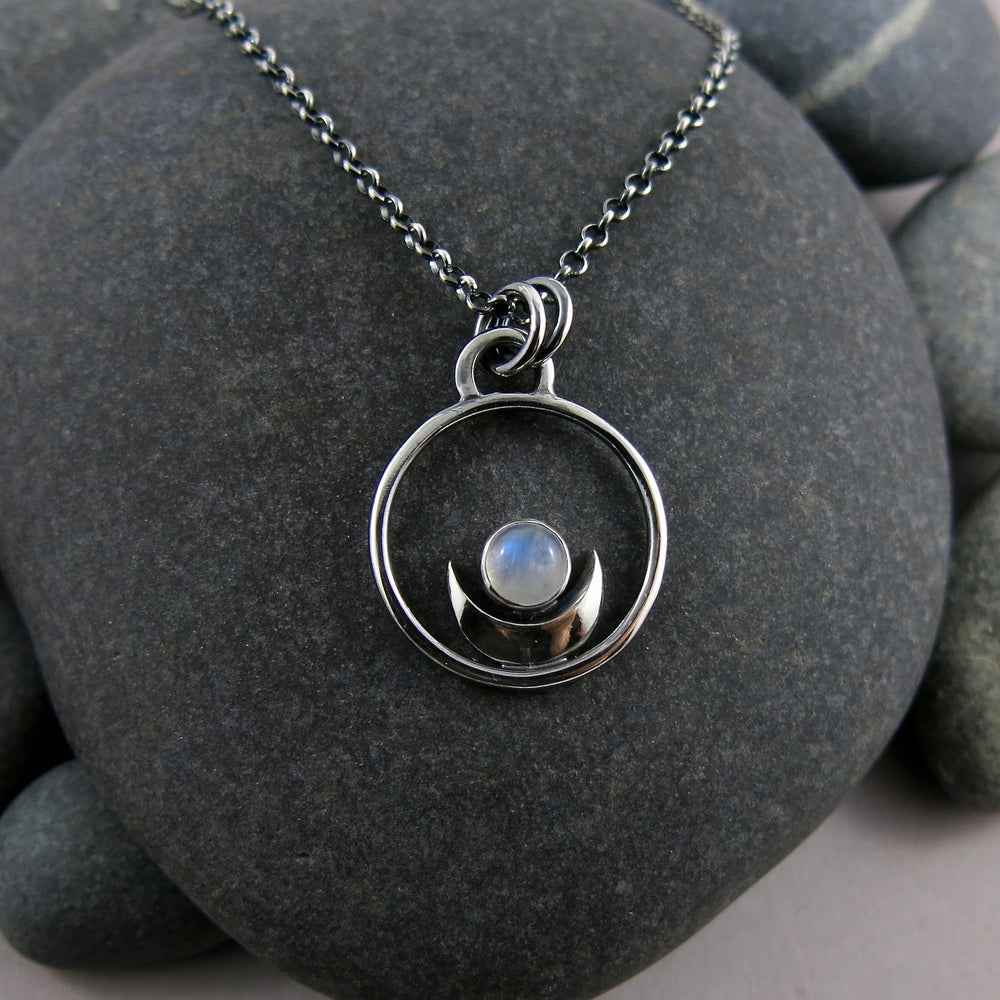
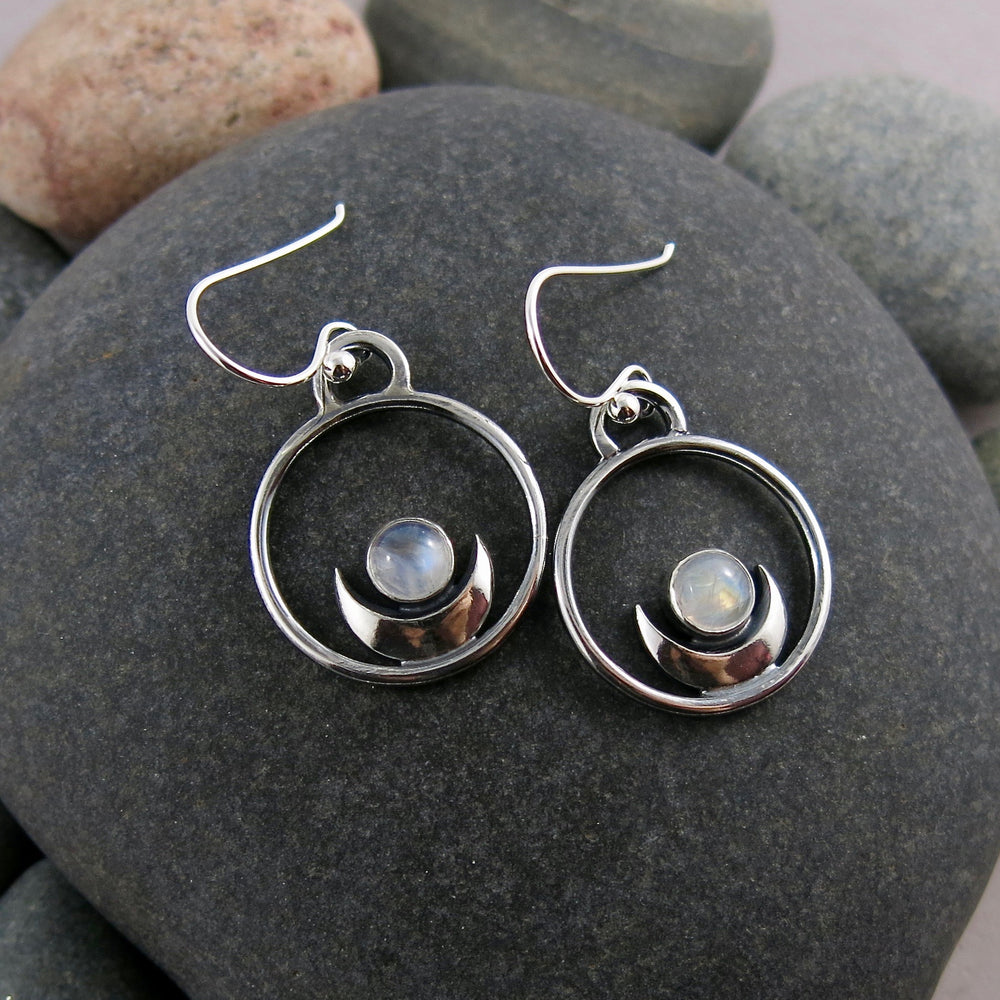
Not quite, and the difference is more interesting than it sounds. Classic moonstone glows with a soft blue sheen. Rainbow moonstone is gemologically closer to labradorite, which is why it throws those sharper flashes of colour instead. The trade has called it rainbow moonstone for a long time and I use the name too, because it describes what you actually see. It is a real stone either way.
Can I wear these every day?
Earrings and pendants, yes, easily. These stones are a little softer than quartz and they have a grain that can chip if they take a hard knock, so a ring worn constantly will collect marks faster than one set with something tougher. Take it off for washing up and gardening and it will be fine. Nothing here needs special treatment beyond common sense.
What metals do you set these in?
Sterling silver mostly, some 14k gold fill, and Argentium wherever the piece touches your ear. Argentium is a silver alloy with no nickel in it, which matters if you react to earrings, and it holds off tarnish considerably better than ordinary sterling.


Super Colourful Rainbow Moonstone Teardrop Pendant • Sterling Silver
À partir de $250.00


Oval Rainbow Moonstone Necklace • Sterling Silver
À partir de $175.00


Rainbow Moonstone Marquise Necklace • Sterling Silver
À partir de $295.00


Rainbow Moonstone Marquise Necklace • Sterling Silver
À partir de $295.00






Carved Rainbow Moonstone Flower Necklace • Sterling Silver
À partir de $300.00